Old Trafford
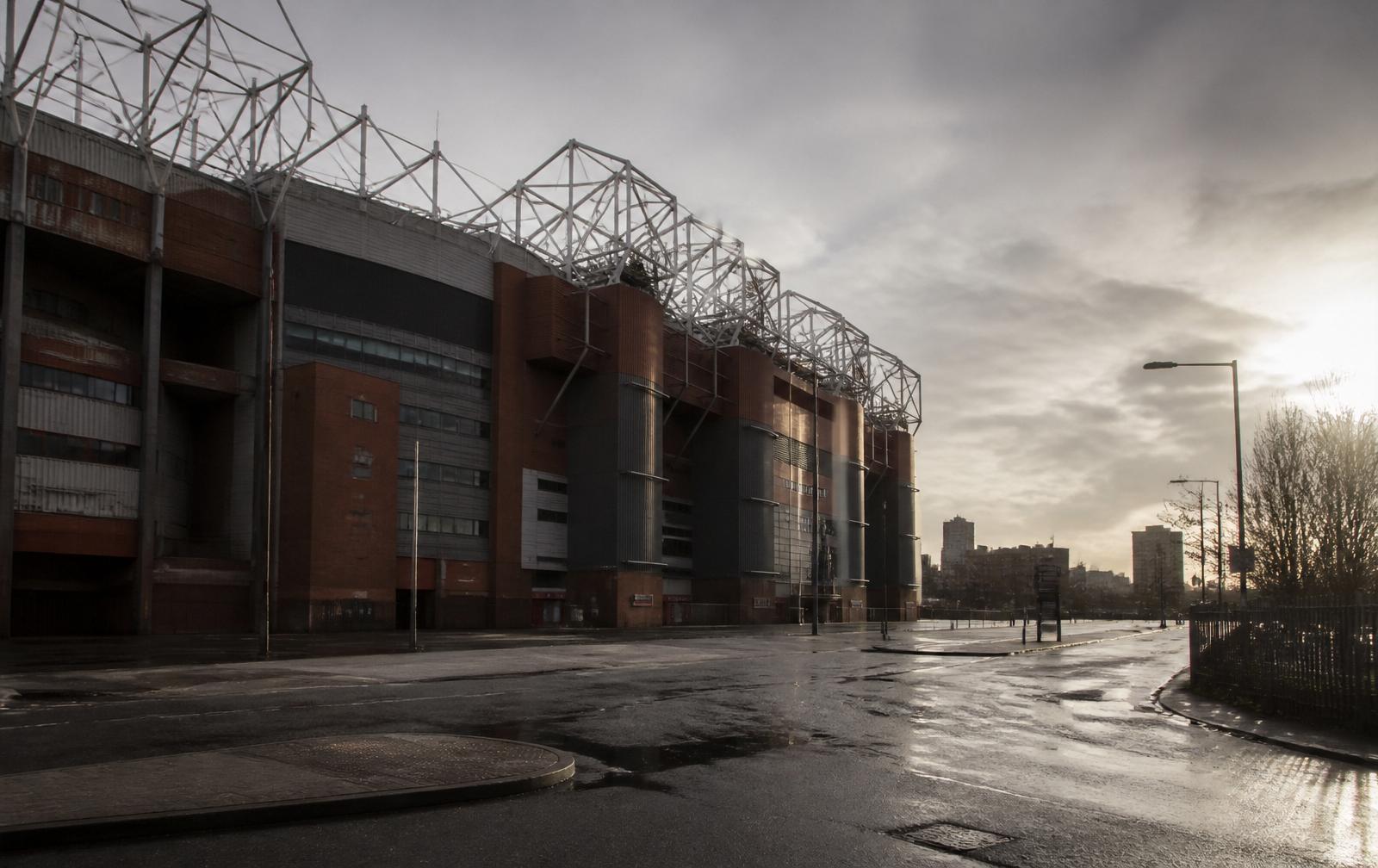
The existing Old Trafford stadium has stood in Trafford, Greater Manchester since 1910. Its long-term future in the context of the proposed new stadium has not been finally decided.
What is on the public record
Facts drawn from published sources about the existing stadium and its immediate context. Every entry is dated and linked.
19 February 1910
Source: Historic England listing entry, Manchester United Football Ground (list ID 1291123).
Archibald Leitch
Source: Historic England listing entry, Manchester United Football Ground (list ID 1291123).
Wharfside (Trafford Park line)
Bridgewater Canal (north), Manchester Ship Canal (north-west)
Source: Ordnance Survey OpenMap.
Trafford Metropolitan Borough Council
Manchester Connected does not reproduce official capacity figures or ticketing information here; refer to the club's official sources for those. Last verified July 2026.
Opened in February 1910 and designed by Archibald Leitch. The ground was substantially rebuilt after Second World War bomb damage and has been expanded in stages across the North, East and West stands.
Sir Matt Busby Way, Longford ward, Trafford, Greater Manchester. Bounded by the Metrolink Trafford Park line to the north-east and the Bridgewater Canal and Trafford Wharfside industrial area to the north-west.
Published proposals locate a new stadium on land immediately north-west of the existing ground, on Manchester United owned freight land adjacent to the Ship Canal. Exact boundaries have not been confirmed through planning.
Options that have been discussed publicly range from redevelopment to demolition. No decision has been formally announced.
No formal decision on the future of the existing stadium has been announced.
Long-term operational plan, community access, and heritage considerations remain open.